
If you want to know how to make a sourdough starter, just go visit the Bake With Jack blog and use his method. I’ve abbreviated it below.
Sourdough Lessons
I achieved success with the Bake With Jack method on my first try. After two other failures – you know the kind:
Take a glass jar forged in the fires of Tartine, make sure it has an organic muslin cover and authentic brown string to tie it on.
Add 200g of organic unbleached strong white bread flour harvested by wheat faeries to 200g of pure unfiltered dechlorinated water from the hills of RedMill.
Stir with a rod of authentic mandrake, thirty times clockwise and thirty-five times counter-clockwise.
Place in your fermenting incubator at a modest 25°C
The next day, face the East and throw it all over your left shoulder to incite the gods of Bacillus
The Web, probably.
Yeah, I ain’t got time for that.
Stop discarding
- Take a container. Any container – old peanut butter jar will do. Add 25g of rye flour (who cares what kind) and 25g of lukewarm tap water. Stir it up and rest the lid on top. Leave it on the side in the kitchen. Forget about it until tomorrow.
Woah! So vague already! What do you mean by “lukewarm”? I mean 32°C exactly. Or 30°C. Or 35°C. You know, warm.
- Next day, add 25g more rye flour and 25g water, same as before. Stir, lid, forget.
- Do that for a total of four days.
- If you’re not seeing bubbles on day 4, do it again. But you should be seeing bubbles by now and the smell has more tang/alcohol.
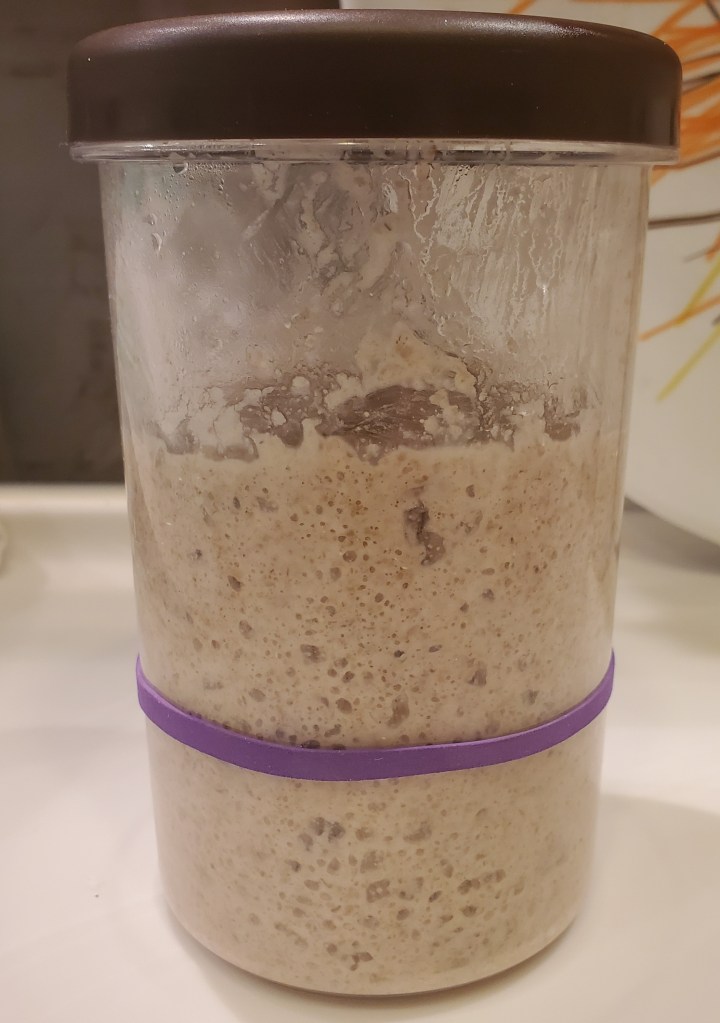
- At some point, your starter will begin to get bigger – increase in size. Now you’re ready to bake!
The Scrapings Method
You might have noticed, the above starter method doesn’t have you adding 200g of anything, nor discarding anything. It’s a waste and will send you running to google for “starter discard recipes”.
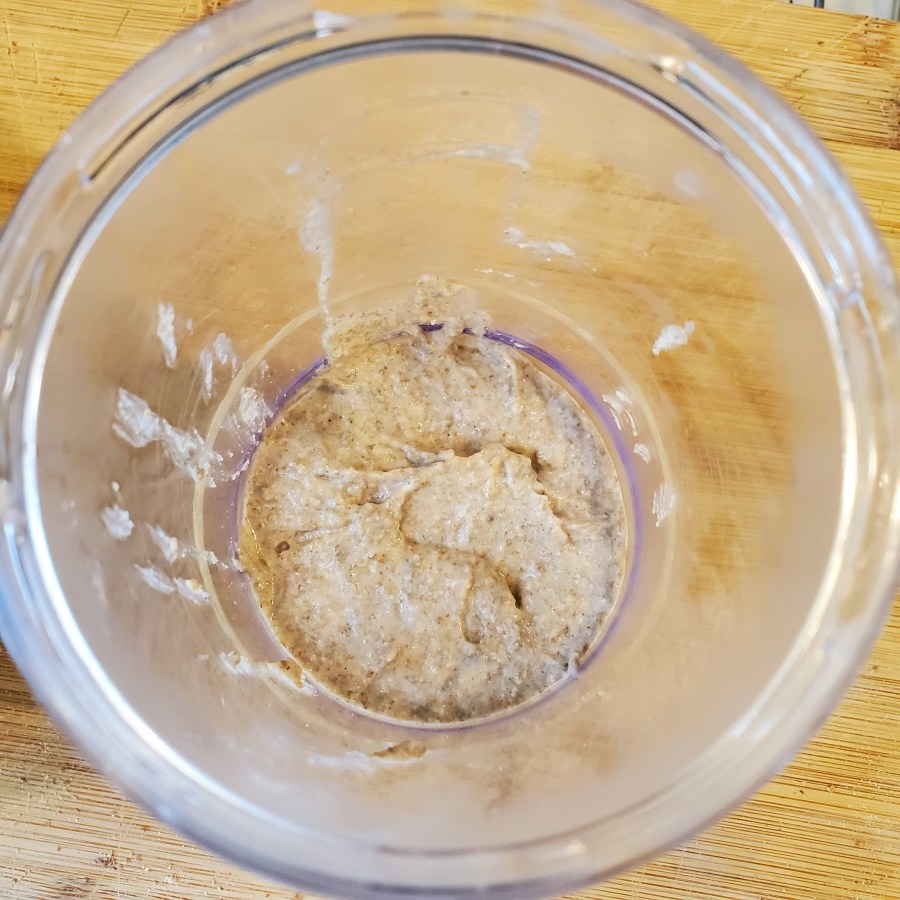
If you’ve followed the above method, you’ve now got around 200g of rye starter you could use for a bake. What you have left afterwards in the jar are the scrapings.
I want you to forget everything you’ve read about feeding your starter daily, or every 12 hours, or at the sound of the dawn crow or whatever.
I want you to take those scrapings (approx 10g-25g if you want to be precise) and add 50g of rye flour and 50g of warm water, same as when you were growing it. Leave in the kitchen. In around 4-6 hours it will have doubled in size and you can use it to bake.
Don’t want to bake today? No problem, just put the scrapings in the fridge. The night before you want to bake, add the 50g each of flour and water and it will be ready for baking in the morning.
Of course, this yields 100g of starter and scrapings for your next loaf. My recipes are based on 100g of starter – you might need to upscale if your recipe requires more.
You can even take the scrapings and use strong white bread flour, wholemeal flour; whatever you want to build as starter (sometimes called levain) for your next loaf.
I am baking every two or three days, but you can leave the scrapings in the fridge for up to two weeks – just feed two consecutive days when you get back from vacation to kickstart it up again. After a week it will probably only need feeding once the night before you bake.
One last thing…rye flour starter is going to be more violent than a white plain or bread flour. It has more goodies in it to feed on, so expect a white flour starter using this method to take more time. Also, rye will add nuttiness and taste to your loaf, but it won’t help with lift. If you’re using a rye starter AND have a lot of wholemeal or rye flour in your recipe, you might want to increate the percentage of white flour.


 twistybakes.kitchen