My bread baking career started as a child, hand kneading with my grandmother. Her tasty, wholesome bread was famous not least for it’s heavy and satisfying crumb but also for the way she would butter the end of the loaf, then hold the loaf vertically to carve the buttered slice off. Weird.
In recent years I’ve been using a Kenwood Chef Titanium. My technique is on point and I can turn out consistent loaves.
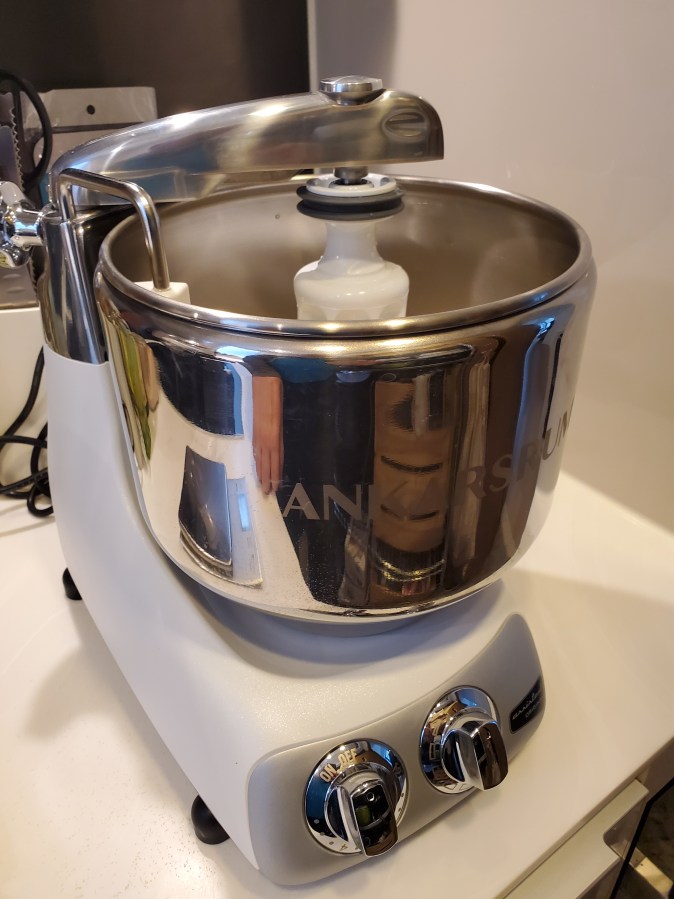
For the last few months I’ve also had an Ankarsrum Assistent mixer. I love the machine, but the quality of my dough was not on par with the Kenwood, or even my own hand-kneading.
So I set out to try some comparative experiments. The series of videos below documents my Ankarsrum learning curve.
Test Mix of SWBF in the Ank
I feel that the Ankarsrum mixes “wet” whereas others say to use less flour. I made this video to solicit advice from the baking community on using the Ank for bread making.
Discussion is taking place on The Fresh Loaf forum, and in the YouTube comments.
Ankarsrum mix Vs Hand Knead
Still trying to understand the interaction between flours and the Ank. I mix two different flours in the Ankarsrum Assistent, and then repeat with the strong flour in a hand knead. All mixes at 65% hydration. The result surprised me!
Ankarsrum Mix with Autolyse
In my quest to perfect mixing bread dough in the Ankarsum Assistent, this third video increases hydration to 68% and I autolyse the flour and water beforehand.
Ankarsrum Longer Knead Times
In the next experiment in my Ankarsrum, I see how my regular white bread dough develops as mix all the way up to 35 minutes. Each mix was done with the speed regulator at the 3 o’clock position. I would assume that mixing faster would reduce the knead times. Whilst I was willing to throw the dough if it was kneaded beyond redemption, you can see the results at the end of the video.


 twistybakes.kitchen